
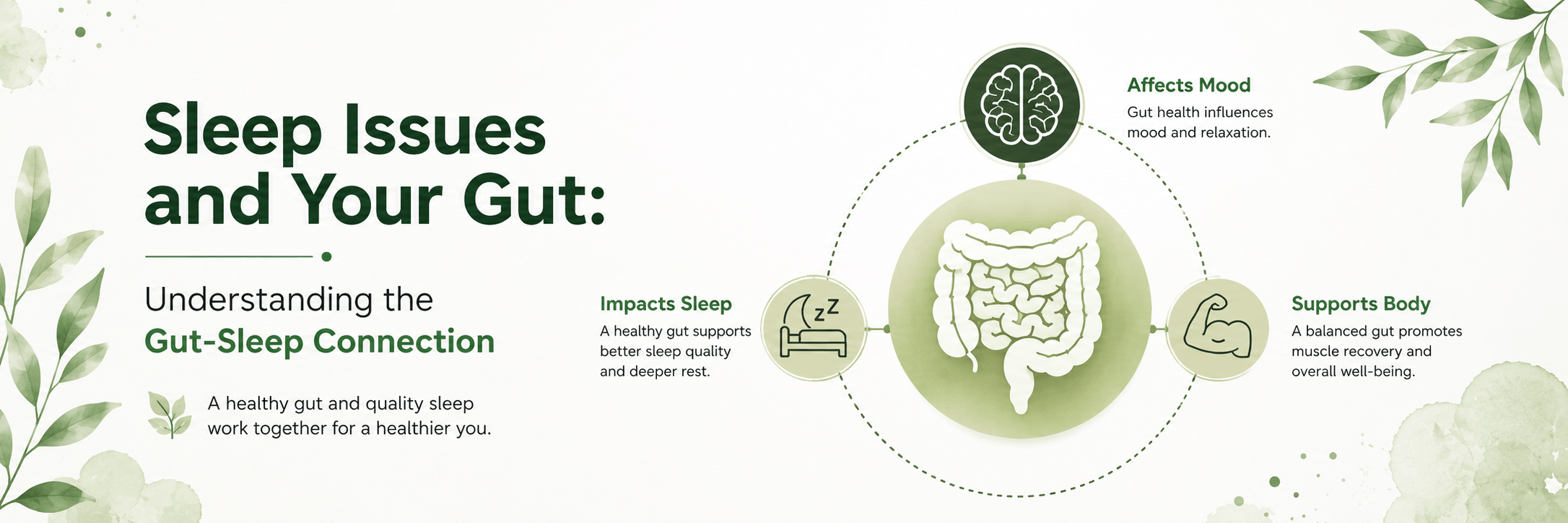
We often think of poor sleep as a problem that starts in the mind. But what if your gut is also playing a role?
Sleep and digestive health are closely connected. The gut and brain communicate with each other through the gut-brain axis, and this relationship can influence sleep, mood, digestion, and overall well-being.
If you regularly struggle with falling asleep, staying asleep, or waking up feeling tired, it may be worth paying attention to your digestive health as well.
What Is the Gut-Sleep Connection?
The gut and brain are constantly communicating through the nervous system, hormones, immune signals, and the gut microbiome.
This means that what happens in your digestive system can influence your brain—and your sleep can also affect your gut.
For example, poor sleep may affect digestion and the balance of bacteria in the gut. At the same time, digestive discomfort or an unhealthy gut environment may make it harder to get restful sleep.
How Can Gut Health Affect Sleep?
Several factors may connect digestive health with sleep quality.
The Gut Microbiome
Your gut contains trillions of microorganisms, including beneficial bacteria. These microorganisms play an important role in digestion, immunity, and many other body processes.
The gut microbiome is also involved in producing or influencing substances related to the sleep-wake cycle. Maintaining a healthy and balanced gut microbiome may therefore support overall sleep and wellness.
Digestion and Night-Time Discomfort
Digestive problems such as bloating, gas, constipation, acid reflux, or stomach discomfort can make it difficult to relax at night.
Eating heavy meals close to bedtime may also leave you feeling uncomfortable when you are trying to sleep.
Stress and the Gut
Stress can affect both your gut and your sleep.
When you are stressed, your body can respond with changes in digestion, appetite, and bowel habits. Ongoing stress may also make it harder to fall asleep or stay asleep.
This creates a cycle where poor sleep increases stress, and stress makes quality sleep more difficult.
Signs Your Gut May Need More Attention
Your body may give you several clues that your digestive health needs attention.
Some common signs include:
- Frequent bloating
- Constipation or irregular bowel movements
- Gas or digestive discomfort
- Acid reflux
- Food sensitivities
- Changes in appetite
- Poor sleep
- Feeling tired even after sleeping
These symptoms can have many different causes, so they should not automatically be attributed to gut health.
How Can You Support Your Gut and Sleep Naturally?
Small, consistent lifestyle changes can support both digestive health and better sleep.
Eat More Fiber-Rich Foods
Vegetables, fruits, beans, legumes, whole grains, nuts, and seeds provide fiber that supports healthy digestion and beneficial gut bacteria.
Include Fermented Foods
Foods such as yogurt, kefir, and other fermented foods can be part of a balanced diet and may help support the gut microbiome.
Choose options that suit your individual dietary needs.
Avoid Heavy Meals Before Bed
Try to finish your evening meal a few hours before going to sleep. This gives your digestive system time to process your food and may reduce nighttime discomfort.
Stay Hydrated
Adequate fluid intake supports normal digestion. However, drinking very large amounts immediately before bed may interrupt sleep with frequent trips to the bathroom.
Manage Daily Stress
Simple practices such as deep breathing, meditation, gentle stretching, or spending time outdoors may help calm the mind and support both digestion and sleep.
Maintain a Consistent Sleep Schedule
Going to bed and waking up at approximately the same time each day can help support your body’s natural sleep rhythm.
Can Improving Gut Health Improve Sleep?
Improving gut health may support better overall well-being, and some people notice improvements in sleep when they address digestive problems and adopt healthier lifestyle habits.
However, gut health is only one piece of the sleep puzzle. Sleep problems can also be related to stress, medications, medical conditions, sleep disorders, lifestyle habits, or other factors.
If sleep problems continue, it is important to speak with a qualified healthcare professional.
A Holistic Approach to Gut and Sleep Health
At Wishful Healing, we believe that wellness is connected. Nutrition, digestion, stress, sleep, movement, and lifestyle habits can all influence how we feel each day.
Rather than focusing on one symptom alone, a holistic approach looks at the bigger picture and helps identify healthy habits that can support the body as a whole.
Your gut and your sleep may be more closely connected than you realize. A healthy digestive system, balanced nutrition, stress management, and good sleep habits can all contribute to better overall wellness.
If you are experiencing ongoing digestive problems or sleep issues, don’t ignore the signs. Understanding the possible connection between your gut and sleep can be a useful first step toward taking better care of your health.
If you need any additional help, please call +91-7973909015 to book a consultation.
Frequently Asked Questions (FAQs)
Can poor gut health cause sleep problems?
Poor gut health may contribute to sleep difficulties in some people, particularly when digestive symptoms such as bloating, reflux, or abdominal discomfort interfere with nighttime rest. However, sleep problems can have many causes.
Does the gut affect the brain?
Yes. The gut and brain communicate through the nervous system, hormones, immune signals, and the gut microbiome. This communication is commonly referred to as the gut-brain axis.
Can probiotics help with sleep?
Probiotics may support a healthy gut microbiome, but their effect on sleep can vary. More research is needed to understand which probiotics may be beneficial for specific sleep concerns.
What foods support both gut health and sleep?
A balanced diet containing vegetables, fruits, whole grains, legumes, nuts, seeds, and other nutrient-rich foods can support overall health. Some fermented foods may also support the gut microbiome.
Can eating late at night affect sleep?
Eating a large meal shortly before bedtime may cause digestive discomfort or worsen symptoms such as acid reflux in some people. Allowing some time between your last meal and bedtime may help.
Does stress affect both the gut and sleep?
Yes. Stress can influence digestion and may also make it harder to fall asleep or stay asleep. Managing stress can therefore be an important part of supporting both digestive and sleep health.
When should I seek professional helpforsleep problems?
If sleep problems are frequent, persistent, or affecting your daily life, it is a good idea to speak with a healthcare professional. Ongoing sleep difficulties may sometimes be related to an underlying medical or sleep condition.