
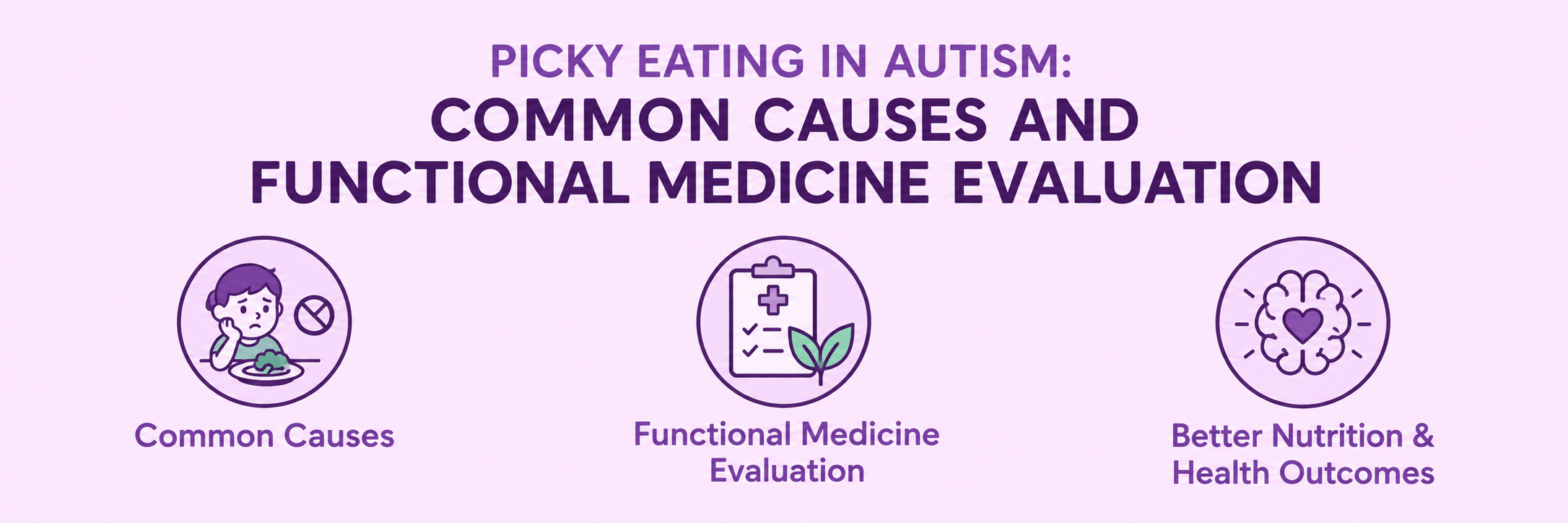
Mealtimes can be challenging for many families, but picky eating can be especially common among children on the autism spectrum. Some children may eat only a few familiar foods, strongly dislike certain textures, or become distressed when a preferred food is changed or removed.
Picky eating is not always simply a matter of being “fussy.” In some children with autism, food choices can be influenced by sensory sensitivities, digestive discomfort, oral-motor difficulties, anxiety, or nutritional factors.
Understanding the reason behind selective eating is often the first step toward finding the right support.
Why Is Picky Eating Common in Autism?
Children with autism may experience differences in sensory processing, communication, behavior, and gastrointestinal function. These differences can affect how they experience food and mealtimes.
A child may reject a food because of its smell, texture, temperature, appearance, or even the sound it makes while being eaten.
For parents, understanding these underlying factors can be more helpful than simply encouraging the child to “eat more.”
Common Causes of Picky Eating in Autism
Sensory Sensitivities
Sensory sensitivity is one of the most common reasons children with autism may have a limited diet.
Certain foods may feel unpleasant because of their:
- Texture
- Temperature
- Smell
- Taste
- Appearance
- Consistency
For example, a child may accept crunchy foods but refuse anything soft or mixed together. Another child may prefer foods of a particular color or shape.
These preferences may be related to how the child’s nervous system processes sensory information.
Gastrointestinal Problems
Digestive discomfort can also affect eating habits.
Children experiencing constipation, bloating, reflux, abdominal pain, or other gastrointestinal symptoms may begin avoiding foods because they associate eating with discomfort.
If a child suddenly becomes more selective or refuses previously accepted foods, digestive health may be worth discussing with a healthcare professional.
Oral-Motor Difficulties
Some children may have difficulty chewing, swallowing, or managing different food textures.
They may prefer soft or easy-to-chew foods and avoid foods that require more chewing. A speech-language pathologist or feeding specialist can help assess these concerns when appropriate.
Food Allergies or Sensitivities
Some children may experience unpleasant symptoms after eating particular foods.
Possible symptoms can include digestive discomfort, skin reactions, or other physical changes. However, food allergies and intolerances should be properly evaluated rather than assumed based only on behavior.
Anxiety and Need for Routine
Many children with autism feel more comfortable with predictable routines.
A familiar food looks, smells, and tastes the way they expect it to. Introducing something new can create uncertainty and anxiety.
This can make children strongly prefer a small group of familiar foods.
Limited Food Variety
Once a child develops a strong preference for certain foods, their diet may become increasingly restricted.
For example, a child may gradually move from eating several types of foods to accepting only a few specific brands, textures, or preparations.
This can make it difficult to meet nutritional needs over time.
Why Functional Medicine Evaluation May Be Helpful
Functional medicine takes a personalized approach and looks at different factors that may be contributing to a person’s health concerns.
When evaluating picky eating, a practitioner may consider areas such as:
- Digestive health
- Nutritional status
- Dietary patterns
- Food reactions
- Sleep
- Stress
- Sensory concerns
- Lifestyle factors
- Growth and development
The goal is not simply to make a child eat more foods. It is to understand why certain foods are being avoided and whether an underlying issue needs attention.
What May Be Included in an Evaluation?
A functional medicine evaluation may begin with a detailed history of the child’s eating habits and overall health.
Dietary Assessment
A food diary can help identify the foods a child regularly eats and the nutrients that may be missing from the diet.
Digestive Health Review
Questions about constipation, diarrhea, bloating, reflux, abdominal pain, and bowel habits may help identify potential digestive concerns.
Nutritional Assessment
Children with highly restricted diets may be at risk of certain nutrient deficiencies. A healthcare professional can determine whether nutritional assessment or laboratory testing is appropriate.
Sensory and Feeding Assessment
Understanding a child’s sensory preferences and feeding skills can help distinguish sensory-related food refusal from other feeding difficulties.
Growth and Development
Growth patterns, energy levels, and developmental needs should also be considered when evaluating a restricted diet.
How Can Parents Support a Picky Eater?
Making mealtimes calmer and more predictable can be a helpful starting point.
Introduce New Foods Slowly
Instead of expecting a child to eat an unfamiliar food immediately, allow them to see, smell, touch, and gradually become comfortable with it.
Keep Familiar Foods Available
Pairing a new food with something the child already accepts can make the experience less stressful.
Avoid Pressure
Forcing a child to eat can increase anxiety around food. Encourage exploration without turning mealtimes into a battle.
Make Mealtimes Predictable
A consistent meal and snack routine may help children know what to expect.
Work With Specialists When Needed
Depending on the child’s needs, support from a pediatrician, registered dietitian, occupational therapist, speech-language pathologist, or feeding therapist may be valuable.
Can Supplements Help With Picky Eating?
Supplements should not automatically be used to compensate for a restricted diet.
If a child has a limited range of foods, a healthcare professional can assess nutritional intake and determine whether supplementation is appropriate.
The priority should be identifying nutritional gaps while continuing to work toward a more varied and balanced diet.
A Personalized Approach to Autism and Nutrition
There is no single diet that works for every child with autism. Dietary needs, sensory preferences, digestive health, and nutritional status can vary significantly.
At Wishful Healing, the focus is on understanding the individual child rather than treating picky eating as a behavior that needs to be corrected without understanding its cause.
A thoughtful evaluation can help families identify practical ways to support nutrition, digestion, and a more comfortable relationship with food.
Picky eating in autism can have many different causes. Sensory sensitivities, gastrointestinal discomfort, oral-motor challenges, anxiety, food reactions, and restricted food routines may all contribute.
Rather than focusing only on what a child refuses to eat, it can be more useful to understand why they are refusing it.
A comprehensive evaluation can help identify nutritional concerns and possible contributing factors, allowing families to create a safe and individualized approach to improving eating habits.
If you need any additional help, please call +91-7973909015 to book a consultation.
Frequently Asked Questions (FAQs)
Why is picky eating common in children with autism?
Picky eating can be associated with sensory sensitivities, preference for routines, gastrointestinal discomfort, oral-motor difficulties, anxiety, and other feeding challenges. The reason can be different for every child.
What foods do autistic children usually prefer?
There is no single list of preferred foods. Some children may prefer foods with predictable textures, tastes, colors, or temperatures. Many may prefer familiar packaged foods or foods that are crunchy, soft, or easy to chew.
Can gut problems cause picky eating?
Digestive discomfort such as constipation, reflux, bloating, or abdominal pain may influence eating behavior. A child who associates certain foods with discomfort may begin avoiding them.
How can parents introduce new foods?
Introduce new foods gradually and without pressure. Allow the child to become familiar with the food through seeing, smelling, touching, and eventually tasting it. Pairing new foods with familiar foods may also help.
Should a picky eater with autism take supplements?
Not necessarily. Supplements should be considered based on the child’s nutritional needs and professional assessment. A restricted diet may increase the risk of nutrient deficiencies, but supplementation should be individualized.
What does a functional medicine evaluation for picky eating involve?
It may include a detailed dietary history, digestive health review, nutritional assessment, growth and development review, and consideration of sensory or feeding concerns. Additional testing may be recommended when clinically appropriate.
When should parents seek professional help for picky eating?
Professional support may be appropriate when a child’s diet is extremely limited, growth is affected, meals cause significant distress, there are swallowing or chewing concerns, or parents are worried about nutritional deficiencies.
Can picky eating be completely overcome?
Every child responds differently. The goal is not necessarily to eliminate food preferences but to gradually improve food variety, nutritional adequacy, and comfort around mealtimes.