
Weight gain is often treated as a simple matter of eating too much or exercising too little. But for many women, the picture is more complicated. Hormones, sleep, stress, nutrition, gut health, metabolism, and blood sugar regulation can all influence how the body stores and uses energy.
One important factor that is often overlooked is insulin resistance.
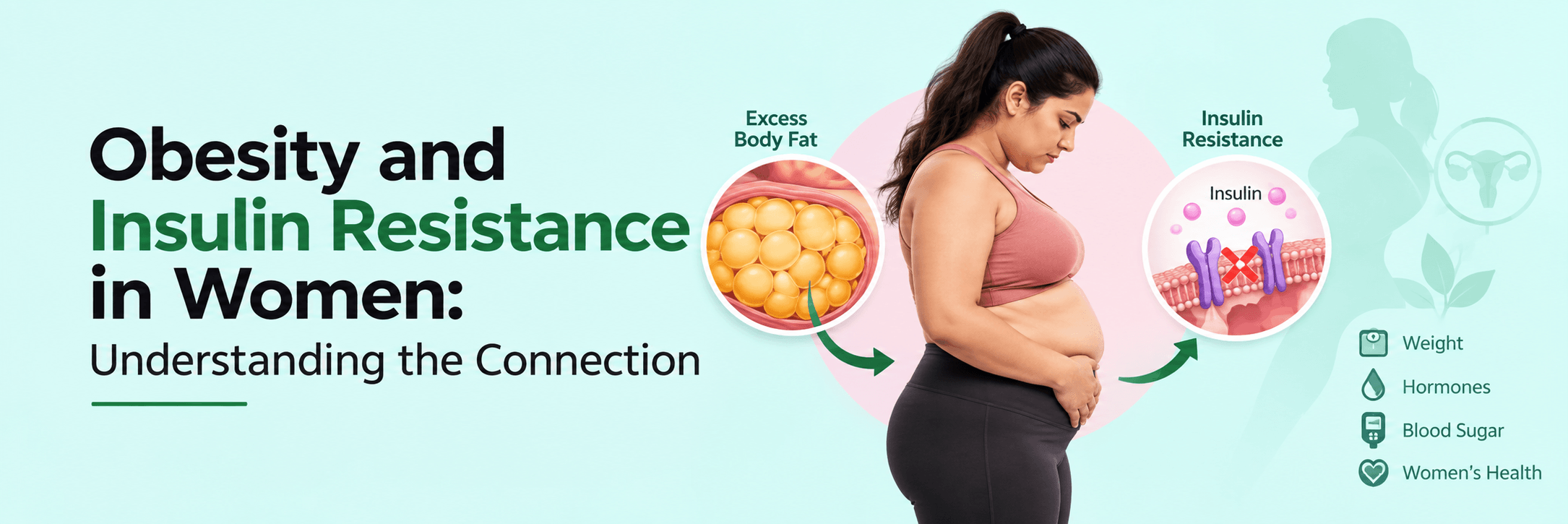
Insulin resistance can affect how the body manages blood sugar and may make it harder to maintain a healthy weight. At the same time, excess body fat can further contribute to insulin resistance, creating a cycle that can be difficult to break.
Understanding the connection between obesity and insulin resistance in women can help identify the underlying factors and support a more personalized approach to health.
What Is Insulin Resistance?
Insulin is a hormone produced by the pancreas. Its main role is to help glucose (sugar) move from the bloodstream into cells, where it can be used for energy.
When someone develops insulin resistance, the body’s cells do not respond to insulin as effectively as they should. The pancreas may compensate by producing more insulin to help keep blood sugar within range.
Over time, this can affect blood sugar regulation and metabolism.
Importantly, insulin resistance can develop before blood sugar levels become obviously abnormal. This is one reason why a woman may experience weight-related or metabolic changes without realizing that insulin resistance could be contributing to them.
How Are Obesity and Insulin Resistance Connected?
The relationship between obesity and insulin resistance is complex and can work in both directions.
Excess body fat, particularly around the abdomen, is associated with metabolic changes that can interfere with insulin signaling. As insulin resistance develops, the body may have greater difficulty managing glucose and energy efficiently.
This can contribute to:
- Increased hunger or frequent cravings
- Difficulty losing weight
- Weight gain, particularly around the abdomen
- Energy fluctuations
- Higher blood sugar and insulin levels
- Increased risk of metabolic health problems
However, it is important to remember that not every woman with obesity has insulin resistance, and insulin resistance can also occur in women who are not considered obese.
This is why looking at the whole person is often more useful than focusing only on body weight.
Common Signs of Insulin Resistance in Women
Insulin resistance does not always cause obvious symptoms in its early stages. Some women may feel generally well while metabolic changes are developing.
Possible signs can include:
1. Difficulty Losing Weight
Some women may find that weight loss becomes unusually difficult despite making changes to their diet and activity levels.
2. Increased Hunger and Food Cravings
Frequent hunger, especially cravings for sugary or carbohydrate-rich foods, may occur when blood sugar regulation is not working optimally.
3. Fatigue After Meals
Feeling unusually tired or sleepy after eating may sometimes be associated with blood sugar fluctuations, although there can be many other causes.
4. Increased Abdominal Fat
Changes in fat distribution, particularly increased abdominal fat, can be associated with metabolic dysfunction.
5. Irregular Menstrual Cycles
Insulin resistance can be associated with hormonal conditions such as polycystic ovary syndrome (PCOS), which may affect menstrual regularity and ovulation.
6. Skin Changes
Some women with insulin resistance develop darkened, thicker areas of skin, particularly around the neck, armpits, or other skin folds. This is known as acanthosis nigricans.
These signs are not specific to insulin resistance, so proper evaluation is important rather than assuming that one symptom has a single cause.
Why Women May Experience Additional Metabolic Challenges
Women’s metabolism is influenced by several hormonal and physiological factors.
Hormonal changes during different stages of life can affect appetite, body composition, energy expenditure, and blood sugar regulation.
Factors that may influence metabolic health include:
- PCOS
- Pregnancy and postpartum changes
- Perimenopause and menopause
- Chronic stress
- Poor sleep
- Sedentary lifestyle
- Highly processed diets
- Certain medications
- Family history and genetics
For this reason, two women with similar body weights may have very different metabolic health profiles.
The Role of PCOS and Insulin Resistance
Insulin resistance is commonly associated with PCOS, a hormonal and metabolic condition that affects many women of reproductive age.
Higher insulin levels can influence ovarian hormone production and may contribute to symptoms such as irregular periods, difficulty with ovulation, acne, unwanted hair growth, and weight changes.
However, PCOS is not simply a weight problem, and not every woman with PCOS has the same symptoms.
A thorough evaluation can help identify the metabolic and hormonal factors that may be relevant to an individual woman.
How Stress and Sleep Can Affect Insulin Sensitivity
Metabolic health is not determined by food alone.
Chronic stress can affect hormones involved in appetite, blood sugar regulation, and energy balance. Similarly, consistently poor or insufficient sleep may make it more difficult for the body to regulate hunger and glucose effectively.
This means that improving metabolic health may require attention to:
- Sleep quality
- Stress management
- Daily movement
- Meal patterns
- Nutrition
- Recovery and relaxation
These factors often work together rather than independently.
Functional Medicine Evaluation for Obesity and Insulin Resistance
A functional medicine approach looks beyond body weight and asks why metabolic changes may be happening.
The evaluation may begin with a detailed discussion of a woman’s health history, lifestyle, diet, sleep, stress, menstrual cycle, medications, and previous health concerns.
Depending on the individual situation, a practitioner may consider areas such as:
Blood Sugar and Metabolic Markers
Testing may be used to understand glucose regulation and metabolic health. Depending on the clinical picture, this can include blood glucose, HbA1c, fasting insulin, lipid profile, and other relevant markers.
Hormonal Health
For women with menstrual irregularities, PCOS symptoms, fertility concerns, or menopausal changes, hormonal health may need to be considered as part of the overall picture.
Nutrition
Dietary patterns, protein and fiber intake, meal timing, food quality, and overall nutritional adequacy can provide important information.
Gut and Digestive Health
Digestive symptoms, food tolerance, bowel habits, and gut health may also be reviewed when appropriate.
Sleep and Stress
Sleep quality, daily stress, physical activity, and recovery can all influence metabolic health and should not be overlooked.
The exact evaluation should be individualized rather than based on a fixed list of tests for every woman.
Supporting Better Metabolic Health
Improving insulin sensitivity is usually not about following a short-term restrictive diet.
A sustainable approach may include:
- Choosing minimally processed, nutrient-dense foods
- Including adequate protein and fiber
- Limiting excessive added sugars and highly refined carbohydrates
- Staying physically active
- Including resistance training where appropriate
- Getting consistent, restorative sleep
- Managing chronic stress
- Avoiding extreme dieting
- Monitoring relevant health markers with professional guidance
Even small, consistent lifestyle changes can be meaningful when maintained over time.
Why a Personalized Approach Matters?
There is no single cause of obesity or insulin resistance.
One woman may have metabolic changes associated with PCOS, while another may be dealing with poor sleep, chronic stress, dietary factors, medication effects, menopause-related changes, or a combination of several factors.
Instead of asking only, “How can I lose weight?”, it can be useful to ask:
“What factors are affecting my metabolism, blood sugar regulation, hormones, and ability to maintain a healthy weight?”
This shift can help move the focus from simply treating weight to understanding the broader picture of metabolic health.
Obesity and insulin resistance in women are closely connected, but the relationship is not always straightforward. Insulin resistance can develop gradually and may exist before noticeable blood sugar abnormalities appear.
Understanding blood sugar regulation, hormones, nutrition, sleep, stress, physical activity, and other individual factors can provide a more complete picture of metabolic health.
If you are struggling with unexplained weight gain, difficulty losing weight, persistent cravings, irregular periods, PCOS-related symptoms, or concerns about blood sugar, a personalized medical evaluation can help identify the factors that may be contributing to your symptoms.
If you need any additional help, please call +91-7973909015 to book a consultation.
Frequently Asked Questions
1. Can insulin resistance cause weight gain in women?
Insulin resistance can be associated with weight gain and difficulty losing weight, particularly when combined with other metabolic, hormonal, dietary, or lifestyle factors. However, weight gain has many possible causes.
2. Can a woman be insulin resistant without having diabetes?
Yes. Insulin resistance can occur before type 2 diabetes develops. Blood sugar may remain within the normal range for some time because the body compensates by producing more insulin.
3. Is insulin resistance common in women with PCOS?
Insulin resistance is commonly associated with PCOS, although not every woman with PCOS has insulin resistance. Individual evaluation is important.
4. What tests can help identify insulin resistance?
Depending on the individual situation, a healthcare professional may consider tests such as fasting glucose, HbA1c, fasting insulin, lipid profile, and other metabolic assessments. The appropriate tests vary from person to person.
5. Can insulin resistance make it harder to lose weight?
It can be one factor associated with difficulty losing weight. However, weight management is influenced by many factors, including hormones, sleep, stress, diet, physical activity, medications, genetics, and overall health.
6. Can insulin resistance be improved?
Insulin sensitivity can improve for many people through appropriate lifestyle changes and, when needed, medical treatment. The most suitable approach depends on the individual’s health and underlying causes.
7. Does losing weight always resolve insulin resistance?
Weight reduction can improve metabolic health for many people, but insulin resistance can have multiple contributing factors. Improving metabolic health should therefore involve more than focusing only on the number on the scale.
8. When should a woman get evaluated for insulin resistance?
Women experiencing unexplained weight changes, persistent cravings, irregular menstrual cycles, PCOS symptoms, a strong family history of metabolic disease, or other metabolic concerns may benefit from discussing evaluation with a qualified healthcare professional.